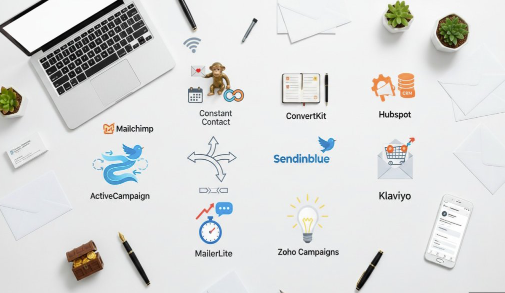
The piece evaluates email marketing tools through a data-driven lens, mapping capabilities to goals with emphasis on deliverability, segmentation, and open-rate benchmarks. Core features—automation, data privacy, and transparent pricing—are analyzed alongside scalability via modular plans and clear tiers. ROI hinges on measurable deliverability and actionable governance. Budgeting accounts for hidden costs and total cost of ownership, while standardized workflows support repeatable performance. The discussion ends with a practical prompt to consider what principles will guide platform choice next.
Which Email Tool Fits Your Goals?
Choosing an email tool begins with aligning capabilities to specific goals. The analysis compares scalability, deliverability, and integration, mapping them to user objectives rather than vendors. Objective metrics examine subject strategy effectiveness and segmentation tactics, emphasizing data-driven benchmarks, open rates, and list hygiene. The tone remains detached, structured, and prescriptive, prioritizing freedom to select tools that align with measurable, goal-oriented outcomes.
Core Features That Drive Results
The analysis emphasizes email deliverability, pinpoint automation triggers, and data privacy controls, with transparent pricing.
Structured comparisons reveal that pricing transparency and modular features correlate with freedom to scale.
Data-driven verdicts advocate standardized metrics, repeatable workflows, and clear governance for sustainable performance.
ROI and Deliverability: What Really Matters
Deliverability and return on investment (ROI) are analyzed as intertwined levers shaping campaign outcomes. In a data-driven frame, benchmarks illuminate performance disparities across platforms, while deliverability benchmarks reveal sender reputation risks and inbox placement variance. ROI pitfalls include mismatched segmentation and over-optimistic conversion assumptions. A structured lens emphasizes measurement rigor, actionable insights, and freedom to optimize strategies without overreliance on single metrics.
Budgeting, Tiers, and Hidden Costs
Budgeting for email marketing involves aligning cost tiers with expected volume, features, and service levels while accounting for hidden fees that may erode ROI.
The analysis highlights budgeting tradeoffs between upfront affordability and long-term scalability, with tier limitations shaping feature access, support, and delivery thresholds.
Teams should quantify total cost of ownership, compare planned vs. actual usage, and monitor renegotiation opportunities.
Frequently Asked Questions
How Do I Transition From Free to Paid Plans Smoothly?
A smooth transition from free to paid plans requires careful transition+pricing assessment and plan+optimization. The analysis shows incremental feature unlocking, cost-benefit mapping, and phased onboarding, ensuring autonomy while aligning usage, budget, and value for freedom-loving users.
Which Tools Integrate Best With My Existing CRM Setup?
Integrations point to CRM integration strength and seamless Workflow automation. Among tools, those with robust API access and native connectors align best, delivering scalable data flows, minimal latency, and transparent dashboards for freedom-focused teams evaluating compatibility and ROI.
How Do I Measure Customer Lifetime Value From Campaigns?
Measurable metrics for CLV derive from revenue forecasting across cohorts, adjusted by audience segmentation; campaigns track incremental value, enabling campaign optimization. The approach quantifies long-term profitability, balancing experimentation with disciplined measurement, supporting strategic freedom within data-driven constraints.
What Are the Best Practices for Re-Engagement Campaigns?
Re-engagement campaigns should leverage data-driven segmentation, A/B testing, and clear value offers. Best practices include timing optimization, personalized messaging, and measurable KPIs. Re engagement ideas emphasize hypothesis-driven iterations, while maintaining freedom to experiment within established guidelines.
See also: Email Marketing Technology Trends
How Reliable Is Inbox Placement Across Email Clients?
Inbox placement varies by client and ISP, making overall performance uneven. Email deliverability hinges on sender reputation, privacy compliance, and list hygiene; data shows higher consistency when providers enforce strict policies and proactive sender authentication.
Conclusion
In this landscape, tools stand as quiet navigators, each beaconed by metrics and sails of policy. Deliverability acts as the steady compass; segmentation, the wind that shapes courses; automation, the rigging that tightens efficiency. Hidden costs loom like unseen reefs, while tiered plans map the voyage. A data-driven map reveals where ROI remains anchored: governance, transparency, and repeatable workflows. Choose the instrument that aligns goals, anchors the ship in clarity, and guides sustainable, scalable journeys through the market.